Crown & cove
From a simple three-inch profile to multi-piece and large cove. Custom profiles, coped corners, paint or stain grade.
Craft
Work is measured to the wall, not the catalog. Profiles are chosen for the room’s light, scale, and existing millwork.
From a simple three-inch profile to multi-piece and large cove. Custom profiles, coped corners, paint or stain grade.
Interior and exterior jambs, sills, casing, cased openings, and plinths. Hung, wrapped, and finished.
Basic through custom and multi-piece base, run into the casing as one connected line.
Ceilings and walls. Racetrack to a straight run. Boards true, lights cut clean, paint or stain.
Layout, mill, and install. Pecky cypress, mahogany, oak, aged stock, and other woods to a pro finish.
Wall paneling, stair skirting, and wall moldings. From the prints to the layout to the last joint.
Explore tongue-and-groove ceilings · custom casing & crown · interior doors · service area
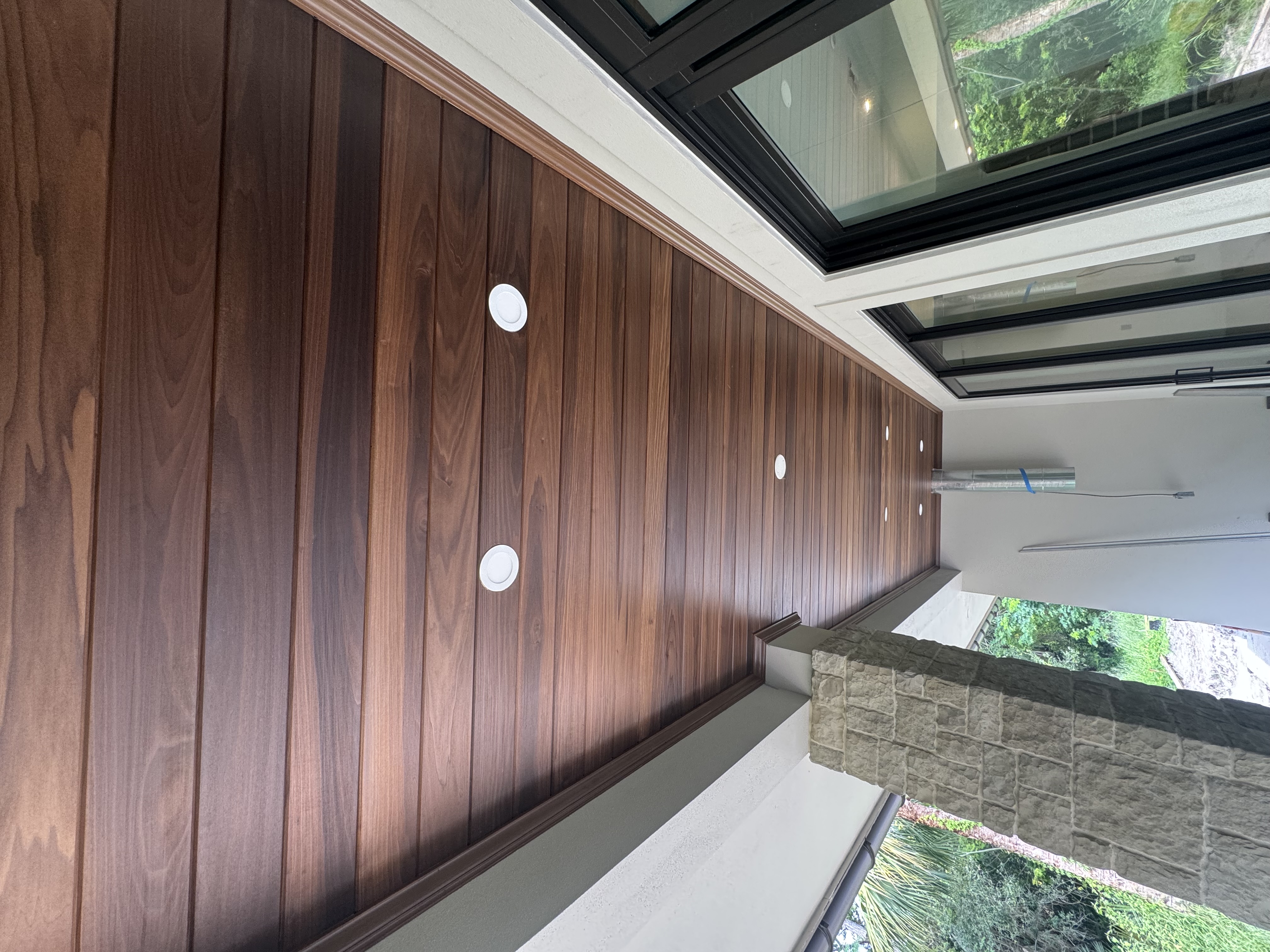
Ceilings and walls. Patio, porch, soffit, and interior runs. Racetrack layouts and straight fields. Boards run true across the plane. Recessed lights are cut clean so the surface reads as one, not a field of patches.
Edges close. Trim wraps the plane. The run is laid out before the first board so joints land where they belong. Finished paint or stain grade, as the house requires.
This is not stock decking flipped overhead. It is millwork: measured to the opening, scribed at the walls, and finished so the light finds no gap.
Crown from a simple three-inch profile to multi-piece builds and large cove. Door and window casings, headers, sills, and aprons run as one composition, not pieces butted together.
Inside corners are coped. Outside corners are returned. Miters are closed so the profile never breaks. Crown is scribed to the ceiling, not caulked into a gap. Paint or stain grade, as specified.
South Florida light is high, hard, and often against glass. Every joint shows. The standard is that it doesn’t.
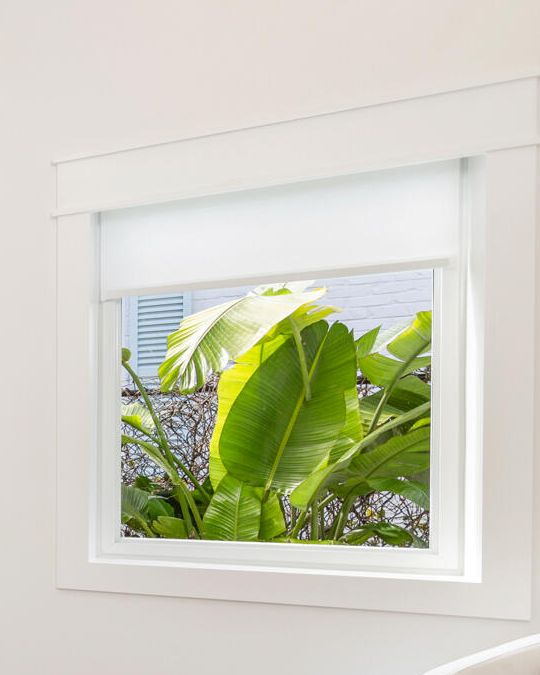
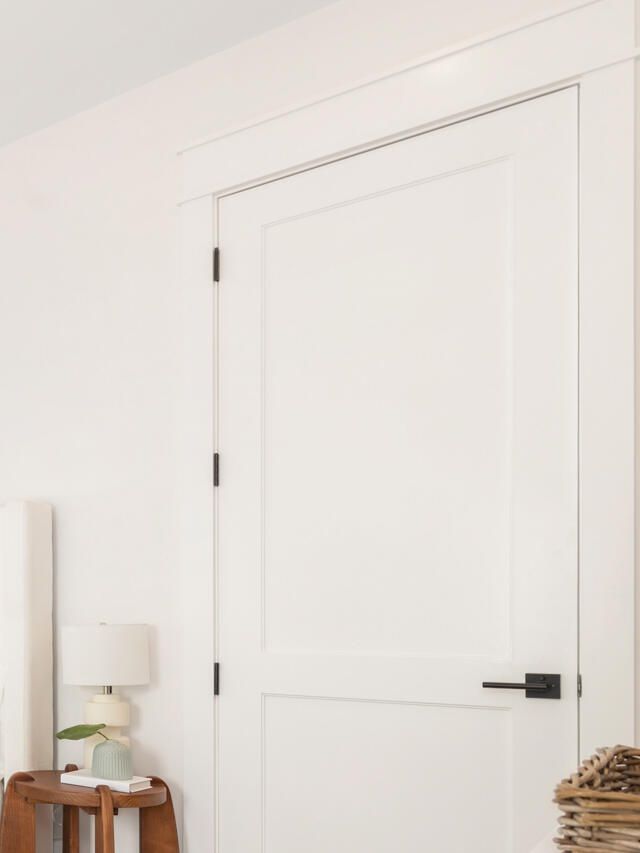
Windows and doors through the woodwork to finish: jambs, sills, casing, and skirting. Interior units hung plumb, margins even, then cased. Exterior jambs when the opening needs them.
Cased openings, large and small, with casing and plinths if the house calls for them. A door is not done when it swings. It is done when the wrap lands as if the wall was built around it.
Layout from the prints. Mill to the spec. Pecky cypress, mahogany, oak, aged wood, and other stock, built and finished paint or stain grade.
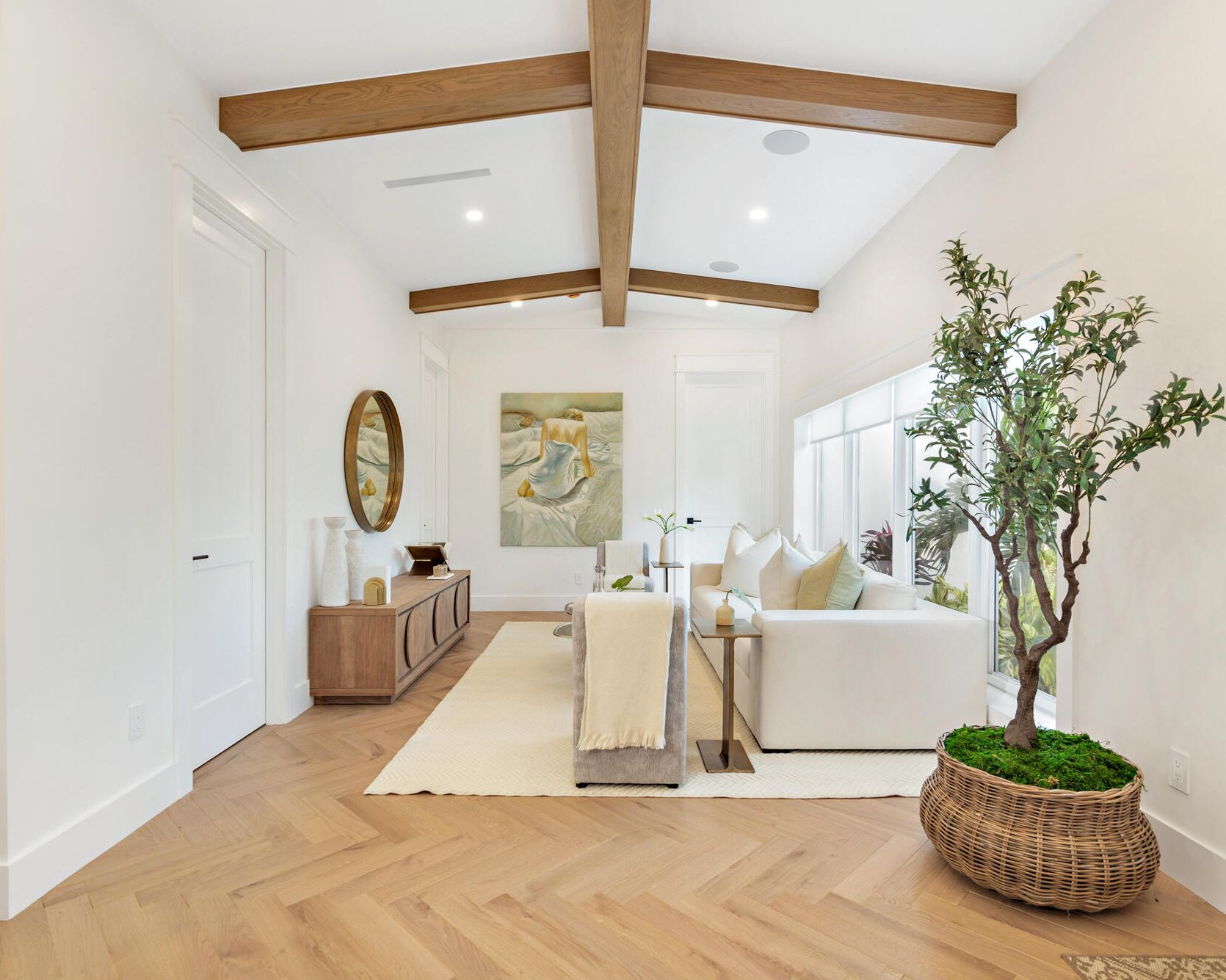
Ridge, cross beams, and coffers land as one frame. Joints close. The grain is allowed to read.
Inquire
Share the house, the scope, and the rooms that need millwork.
Inquire